The USDA National Agricultural Statistics Service will host a Q&A session tomorrow, March 8 via Twitter to help answer questions regarding the 2012 Census of Agriculture to be conducted later this year. The Census of Agriculture is a complete count taken every five years of America’s farms and ranches and the people who operate them. It is the only source of uniform, comprehensive and objective agricultural information for every county in the nation. Renee Picanso, NASS census and survey division director along with Joe Prusacki, NASS statistics division director, will conduct a live session via Twitterview on March 8 at 1 p.m. EST. Email questions in advance and access the live session on March 8.
USDA to Host Live Q&A Twitter Session on Upcoming Ag Census
FSA Keeps Family Farming Tradition Alive

Greg and Heather Hengst stand in their future sweet corn location that overlooks the pasture.
by Cassie Bable, public affairs specialist, Texas FSA
Greg Hengst grew accustomed to the farming lifestyle as a child. His grandfather, father and deceased great uncle were all farmers. Greg knew without a doubt that he wanted to farm since his freshman year of high school.
With farming in mind, Greg graduated from Texas A&M University with a degree in Agronomy. After meeting his wife Heather, also a Texas A&M graduate, Greg decided that it was time to start farming independently. Greg and Heather grew up in farming families. They are used to the lifestyle, uncertainty and satisfaction associated with farming.
FSA Accepting Applications for Conservation Loan Program
The Farm Service Agency is now accepting guaranteed loan applications for the Conservation Loan Program. Based on a March 7 Federal Register notice, a lack of funding halted the acceptance of applications for the program until an appropriation to fund guaranteed loans for the program was approved under the Consolidated and Further Continuing Appropriations Act, 2012. Applications for direct loans for the Conservation Loan Program are not being accepted at this time. Read the Federal Register notice or learn more.
Schedules for Upland Cotton Loan Rate Differentials Revised
The USDA Commodity Credit Corporation announced revised loan rate ranges and base-quality ranges for upland cotton strength and length uniformity, and changes to the staple lengths for which distinct color and leaf loan rate differentials are provided. Effective with the loan schedule for 2012, the base quality range for strength is established at 26.0 – 28.9 grams per tex and length uniformity is at 80.0 – 81.9 percent. These new ranges are consistent with Agricultural Marketing Service’s price reporting and the objectives of the marketing assistance loan program. Learn more.
CRP General Sign-Up Opens in One Week
USDA will kick off a general sign-up for the Conservation Reserve Program beginning March 12. The voluntary program allows agricultural producers the opportunity to plant long-term, resource-conserving covers to improve the quality of water, control soil erosion and develop wildlife habitat. In return, USDA provides participants with rental payments and cost-share assistance. Those interested in participating will have four weeks from the start date to submit an application. In its 25 years, CRP has successfully protected the nation’s natural resources while providing significant economic and environmental benefits to rural communities across the United States. Learn more.
Nearly 3 Percent of Dairies Produce Half of U.S. Milk Supply

Slightly more than half of the U.S. milk supply last year was produced by only 2.9 percent of the nation’s dairy farms, according to a USDA report. Based on the report, 50.3 percent of the milk supply came from farms with 1,000 or more cows, while 34.6 percent came from farms with more than 2,000 cows. View the report or read more (Dairyherd Network).
New CRP Program to Restore Wetland, Grassland, Wildlife
USDA introduced a new Conservation Reserve Program that will help preserve 1 million acres of grasslands and wetlands. “CRP is one of our nation’s most valuable and vital conservation efforts, ensuring cleaner air and water, preventing soil erosion, and enhancing economic opportunity in rural America by supporting recreation and tourism,” said Agriculture Secretary Tom Vilsack. The program — administered by FSA — seeks to enroll 32 million acres of environmentally sensitive land through targeted sign-ups that benefit duck nesting habitat, upland birds, pollinators and wildlife. Learn more.
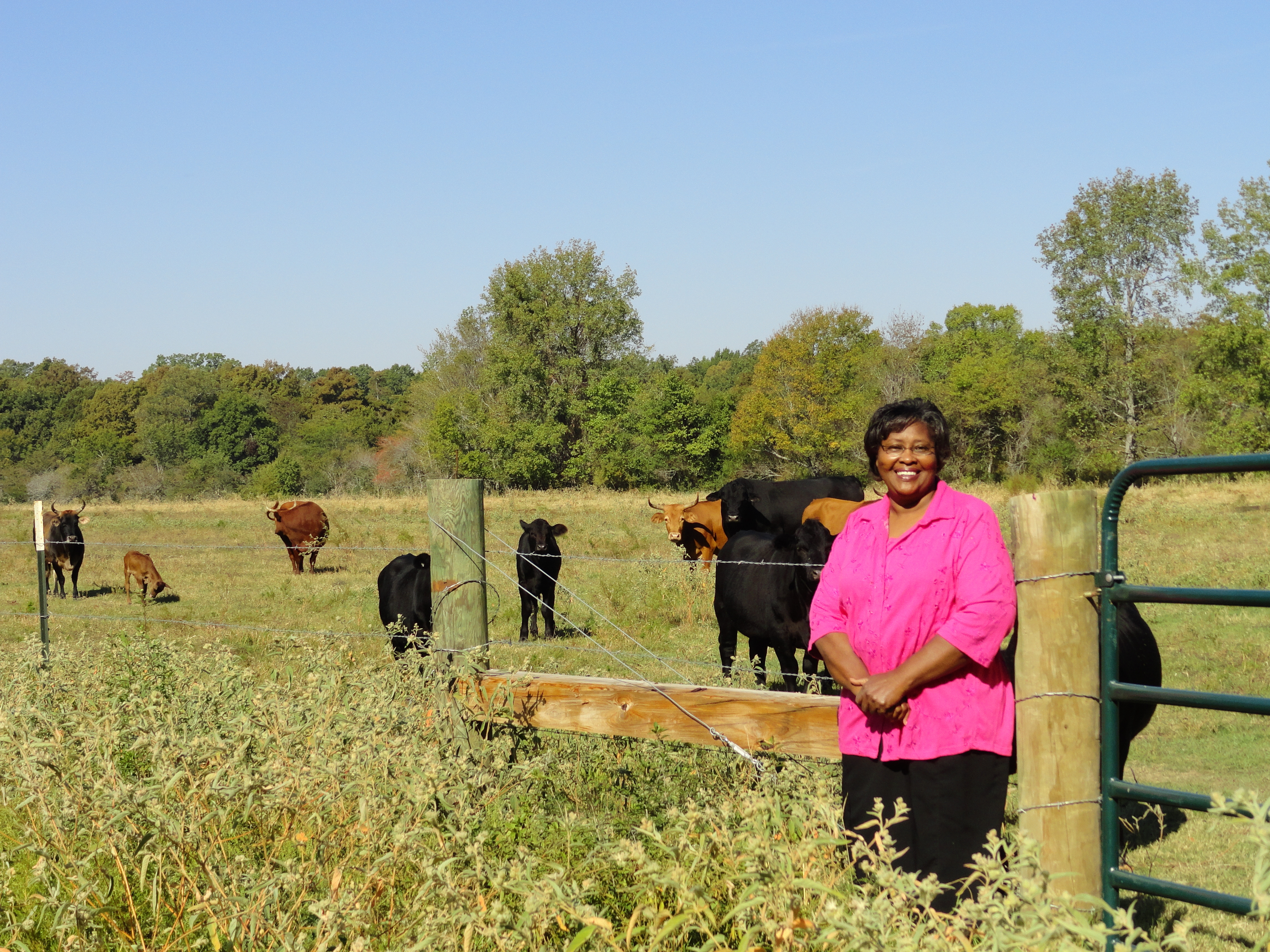
FSA Helps Arkansas Widow Carry On Husband’s Legacy
by J. Latrice Hill, FSA Outreach Program Lead
Curtistene Jackson knows all too well the challenges farming can bring. Being a socially disadvantaged female farming in Arkansas has not been easy.
Ever since her late husband Lawrence passed away in 2008, Curtistine, along with their son William, has taken the reins of the Jackson family farm. The Jacksons have owned their farm since 1990. Jackson first started working on the family farm at the age of 18. The legacy he started with his vegetable and livestock farm is now being carried on by his wife and son.
USDA Introduces New Know Your Farmer Online Compass

The USDA Know Your Farmer, Know Your Food Compass was unveiled this week, giving farmers, ranchers and consumers and interactive map of USDA-supported local and regional food activities in all 50 states. The compass gives people the chance to navigate USDA resources for local and regional food, and meet farmers, ranchers, businesses and communities in their state that are participating in local food chains. The Web page also provides information on local and regional food projects across the country. Learn more or visit the compass (USDA blog).
Conference Finds New Way to Bring Female Producers Together
by Chris Bieker, outreach and communications coordinator, Washington State FSA
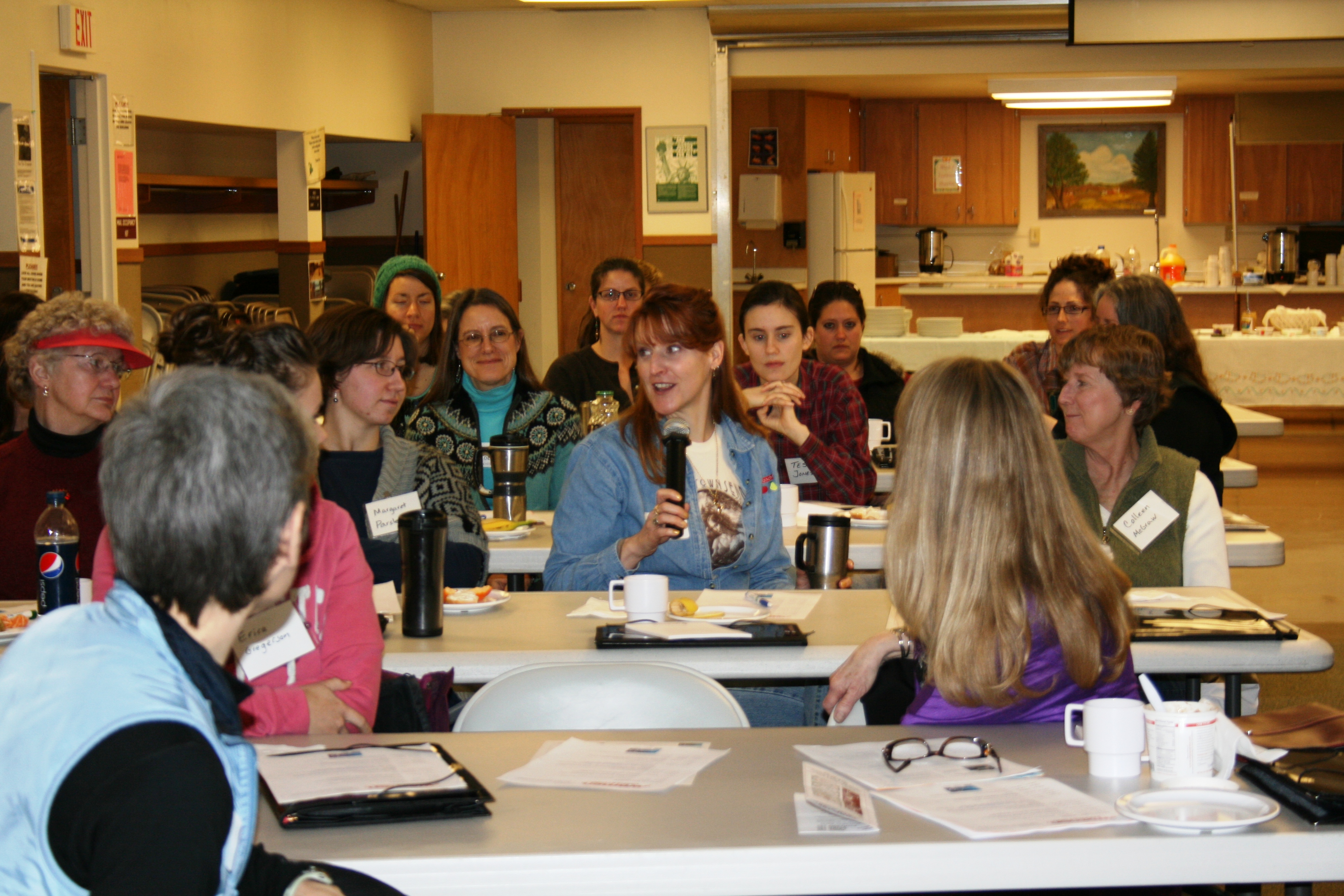
Women producers from throughout Washington state did something this February that they rarely do — they met neighboring women producers at a statewide conference.
In trying to overcome barriers that deter women producers from attending conferences, planners of the Washington Women in Agriculture Conference tried a new and unique format — videoconference. More than 480 women participated in the event that took place simultaneously in 16 locations throughout the state. Past statewide conferences attracted about 140 producers.
Feedback from past conferences and workshops identified travel as being a major barrier for women to participate. Women producers have difficulty leaving farm, family and community commitments for any length of time. This difficulty is compounded by the timing of most conferences and workshops taking place in the winter. Winter works best for farm schedules but Washington roads and mountain passes pose travel challenges and family and community commitments increase with school activities.