
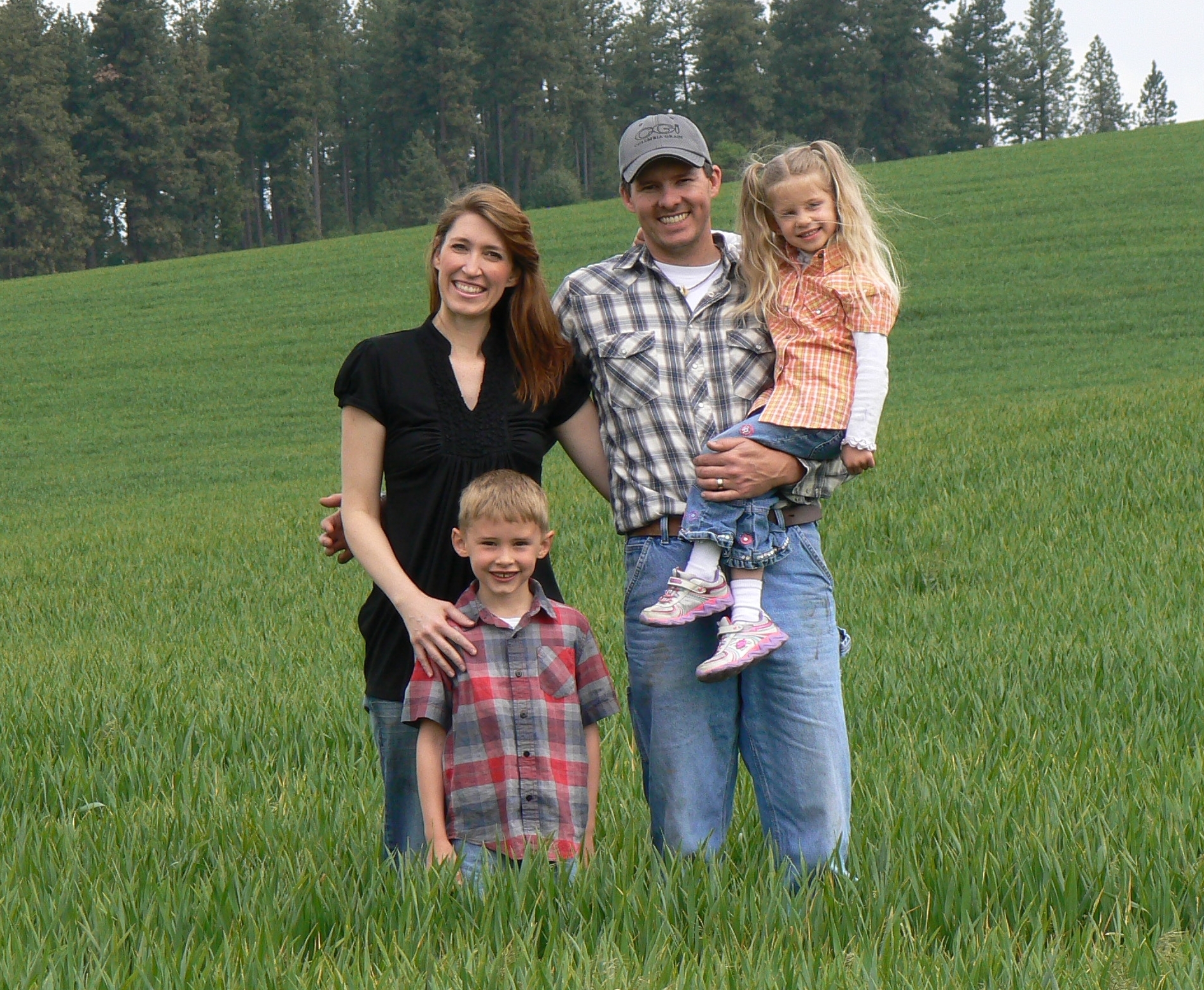
Bringing the Fourth Generation Back to the Farm

Jacob Vowels and his family used FSA loans to help keep their family farm in the family.

When the future of a three-generation Idaho farm was uncertain, the Farm Service Agency’s support to a beginning farmer helped keep the family’s agricultural legacy alive.

Three generations of Jacob Vowels’ family had once farmed nearly 2,000 acres along the western edge of the fertile Palouse in Idaho, but in 1991, like so many other small farms in the West, their operations ceased and their land was leased.

In 2007, Jacob, the eldest of three sons, had earned a college degree from the University of Idaho, married his wife Anna, was a new father and a successful business owner in the housing sector.  That same year, the lease on the family land came up for renewal and his parents and grandparents asked Jacob if he might be interested in farming the 675 acres of rolling wheat pea and lentil fields.

“I realized when the opportunity presented itself that it had always been my dream to carry on the family farm,” Vowels said. “But it was clear from the beginning that there were many big obstacles I’d have to overcome to make it really happen.” Continue reading
Posted in Features | Tagged , , , | Comments Off on Bringing the Fourth Generation Back to the Farm

Additional 39 Counties in 8 States Declared Disaster Areas Due to Drought

Another 39 counties in eight states have been named primary natural disaster areas by Agriculture Secretary Tom Vilsack due to drought. Last week, Vilsack announced a new process for declaring disaster areas, which fast-tracked 1,016 counties across the country into that status due to drought. The declaration makes qualified producers eligible for low interest emergency loans. The additional counties are located in Arkansas, Georgia, Indiana, Mississippi, New Mexico, Tennessee, Utah and Wyoming. Learn more.

Posted in News | Tagged , , | Comments Off on Additional 39 Counties in 8 States Declared Disaster Areas Due to Drought

Two Weeks Left in 2012 County Committee Nomination Period

Only two weeks remain in the nomination period for the 2012 county committee elections, giving farmers and ranchers just a few more days to select themselves or others as candidates to sit on their local county committee and help make important agricultural decisions. Members of the committee deliver FSA farm programs at the local level and make decisions needed to administer the programs in their counties. The nomination period closes Aug. 1. Learn more about the county committee electionsdownload an online application in English or Spanish.

Posted in News | Tagged , | Comments Off on Two Weeks Left in 2012 County Committee Nomination Period

Newly Released Publication Guides Farmers, Ranchers Through FSA Loan Process

A new, easy-to-read guide designed to help farmers and ranchers navigate through the FSA Farm Loan Program is now available online. The guide provides customers with information on the types of loans available, loan servicing and other helpful resources for starting, expanding or owning a farm or ranch. Questions on how to apply for a guaranteed or direct loan, what happens once the application is submitted and what are the rights and responsibilities of the borrower, are answered in this comprehensive booklet. Originally designed as part of a class action lawsuit settlement — Keepseagle v. Vilsack — that required access to a plain language guide for FSA farm loans, the publication is available to anyone who needs information on the farm loan process. Read “Your Guide to FSA Farm Loans.

Posted in Features | Tagged , , , | 1 Comment

Teacher, Mentor Puts Talk Into Action

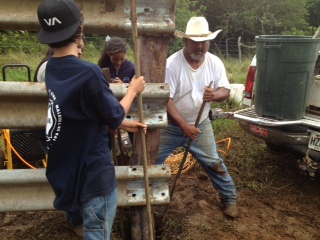
David Fuertes uses his ranch to mentor youth in at-risk communities in Hawaii County.

By Josie Malepeai Lealasola, American Samoa FSA and Lester Ueda, Hawaii County

David Fuertes wanted to do more than just deliver lip service when it came to agriculture.

Working as an ag teacher at Kohala High School on Hawaii Island, Fuertes taught and mentored students about caring for the land and giving back to the environment.

“My goal has always been to live up to our state motto, ‘The life of the land is perpetuated in righteousness.’ The proper investment in the right practices ensures that I’m being a steward of the land,” said Fuertes.

So after 30 years of teaching, he settled into retirement to do just that — become a steward of the land.

“I was prepared to start my own ranch assuming the responsibility to care for the environment,” he said. “It was extremely impossible to start my ranch with limited capital and all the cost factors of farming with proper conservation practices.” Continue reading

Posted in Atop the Fence Post | Comments Off on Teacher, Mentor Puts Talk Into Action

Going Viral: ‘Sexy and I Know it’ Farm Parody Educates Millions

Posted in Features | Tagged | 2 Comments

Journals Reveal Changes in Farming Since 1870s

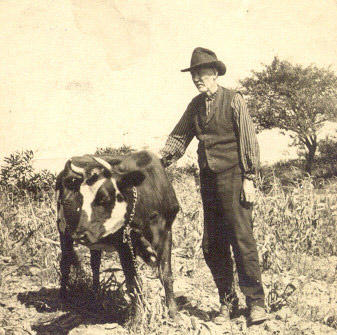
David Reynolds with one of his cows. Photo copyright © Deborah O’Donoghue

By Deborah O’Donoghue, public affairs specialist, FSA Public Affairs Branch

On May 15, 1862, President Abraham Lincoln signed into law a piece of legislation that established the U.S. Department of Agriculture. It was the beginning of what Lincoln penned the “People’s Department.” A few years later, one of those people wrote in a journal:

 June 5, 1875 — “Bought 16 bushel of rye from Henry Philipi paid him $20.00 for it.”

That person was my great-grandfather David Reynolds who lived in Jefferson County, Pa., just a stone’s throw from where Interstate 80 now runs.  He was the son of Woodward Reynolds, the founder of Reynoldsville, Pa. If you’re unfamiliar with Reynoldsville, it’s near Emerickville, Prescottville, Sykesville, Brookville and Roseville. All of these ‘villes bunched together are about 75 miles northeast of Pittsburgh.

David was born in 1838 and died in 1916, leaving more than 30 years of journals that have been passed down through three generations of my family. Each journal chronicled his daily life, giving insight to everything from farming…

June 22, 1875 — “The rain was very much wanted as the crops was standing still for want of it.”

To politics…

June 30, 1875 — “The President and other high officials in Reynoldsville this afternoon selecting a site for a depot. A lively interest taken by the citizens.” Continue reading

Posted in Features | Tagged | 2 Comments

New Designation Process Fast-Tracks Thousands of Counties into Disaster Status

More than 1,000 counties across the United States will be labeled as primary natural disaster areas as of tomorrow, July 12, according to Agriculture Secretary Tom Vilsack, making this the largest single disaster announcement in USDA history. During a media conference announcing improvements to the disaster designation process, Vilsack said the new rules will fast track 1,016 counties immediately into the status of primary natural disaster areas, making farmers and ranchers eligible for low-interest loans. Citing the USDA Crop Report released earlier today, Vilsack said drought and other natural disasters contributed to a decline in crop estimates, leaving farmers and ranchers in need of help to assist with recovery. The new process allows counties rated as being in a severe drought by the U.S. Drought Monitor for eight consecutive weeks to be automatically listed as a primary natural disaster area without needing a state governor or Indian Tribal council to initiate the request. Vilsack added that interest rates for disaster loans also have been reduced from 3.75 to 2.25 percent. View list of primary and contiguous disaster counties.

Posted in News | Tagged , , , , | Comments Off on New Designation Process Fast-Tracks Thousands of Counties into Disaster Status

Change in Disaster Process Provides Faster Service, Lower Interest Rates

Farmers and ranchers affected by natural disasters can now receive faster and less burdensome assistance from the U.S. Department Agriculture.

Agriculture Secretary Tom Vilsack announced today improvements to the Secretarial disaster designation process that will reduce wait time by 40 percent, reduce interest rates from 3.75 to 2.25 percent and reduce rental rates on Conservation Reserve Program lands qualified for emergency haying and grazing.

“It is ever more important that we have the proper tools to act quickly and deliver assistance to our farmers and ranchers when they need it most,” said Vilsack. “By amending the Secretarial disaster designation, we’re creating a more efficient and effective process. And by delivering lower interest rates on Emergency Loans and providing greater flexibility for haying and grazing on CRP lands, we’re keeping more farmers in business and supporting our rural American communities through difficult times.

The improvements streamline the disaster designation process by automatically qualifying counties a disaster area once they are categorized by the U.S. Drought Monitor as being in a severe drought for eight consecutive weeks of the growing season. Governors and Indian Tribal councils are no longer required to send a letter to the Agriculture Secretary initiating a disaster designation; however, the same criteria currently being used to trigger a disaster designation will apply. The criteria includes showing a 30 percent production loss of at least one crop countywide, or a decision must be made by surveying producers to determine that other lending institutions are not able to provide emergency financing. Learn more.

Posted in News | Tagged , , , , | Comments Off on Change in Disaster Process Provides Faster Service, Lower Interest Rates

Drought Causes Cut in Corn Harvest Estimates

One of the worst droughts in the Midwest has the U.S. cutting corn harvest estimates by 12 percent. A report released today by the U.S. Department of Agriculture predicted that farmers will harvest 12.97 billion bushels of corn, down from 14.79 billion estimated in June. Read more (Bloomberg) or view the report.

Posted in Atop the Fence Post | 1 Comment