The 2013 Agricultural Outlook Forum will open its doors tomorrow to start a two-day conference focusing on “Managing Risk in the 21st Century. Held Feb. 21-22 in Arlington, Va., the forum will feature 25 sessions with more than 85 speakers. Former South Dakota Senator Tom Daschle will serve as the distinguished guest speaker and Agriculture Secretary Tom Vilsack will present the keynote address. Learn more.
Sign-Up for ACRE, DCP Opens Today
The sign-up period for the Direct and Counter-Cyclical Payment Program (DCP) and the Average Crop Revenue Election Program (ACRE) opens today, Feb. 19. Changes to this year’s program allow producers to choose to enroll in either program. Originally, producers who signed up for ACRE could not move out of the program for at least five years. With the extension of the 2008 Farm Bill, those rules have changed, giving farmers an option to move out of ACRE into DCP or vice versa. Read more about DCP and ACRE or contact a local county office to sign up.
Federal Workers May Soon Get Paid Parental Leave
A new bill introduced in the House will give four weeks of paid leave to federal workers upon the birth or adoption of a child. The bill — introduced Feb. 5 — also would allow employees to use annual or sick leave to offset 12 weeks of unpaid leave guaranteed by the Family Medical Leave Act. The federal government lags behind the private sector when it comes to paid parental leave. Currently, 53 percent of private-sector employers provide some form of paid parental leave, while federal employees generally deplete their annual and sick leave after birthing or adopting a child. Read more (FedSmith).
Tough Economy Not a Problem for Agriculture Graduates
Agribusinesses are booming. With farm incomes at record highs, producers are purchasing more seed, fertilizer and equipment. The result? A massive recruiting effort at colleges and universities to find soon-to-be graduates with agriculture degrees. While many college graduates may face a bleak economy, agriculture students are leaving college and walking directly into jobs, with some positions starting at $50,000 a year. Read more (The Wall Street Journal).
Hispanic and Women Farmers Claims Must be Postmarked by March 25
Hispanic and women farmers and ranchers who allege discrimination by USDA in past decades have until March 25, 2013, to file a claim in order to receive a cash payment or loan forgiveness. The claims process is a voluntary alternative to litigation for each Hispanic or female farmer or rancher who can prove that USDA denied an application for loan or loan servicing assistance for discriminatory reasons for certain time periods between 1981 and 2000. Claimants may contact a call center representative at 1-888-508-4429 for a package or download the forms online. Learn more or download the online forms.
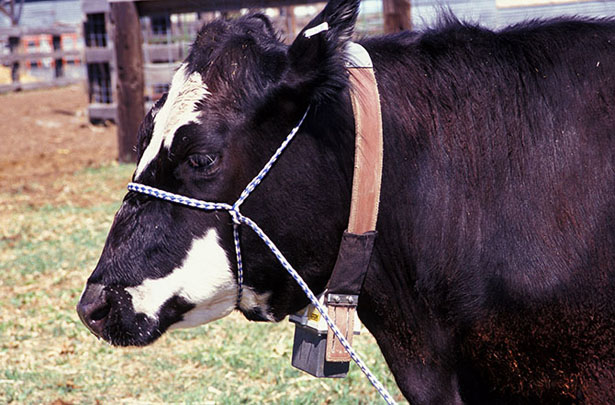
GPS Cows and Virtual Fences Become Future of Farming
Conventional fencing can be restrictive and not allow for flexibility most ranchers need. That is why one USDA researcher is aiming to do away with traditional fencing for an invisible, high-tech version. Dean M. Anderson wants to make the land of the free, free again by helping producers easily move livestock to fruitful pasture throughout the season by using virtual fencing. You can see that, with conventional fencing, you might have your cows way over on the western perimeter of your land, while the rainfall takes place along the other edge,” said Anderson. “In two weeks, where that rain has fallen, we are going to have a flush of annuals coming up, which would provide high-quality nutrition. But, if you have the animals clear over three pastures away, then you’ve got to monitor the rainfall-related growth, and you’ve got to get labor to help round those animals up and move them over to this new location.” Livestock would be equipped with GPS devices that could move them from one section to another and keep them within the boundaries. Read more (The Atlantic).

Net Farm Income to Break 40-Year Record
Net farm income is expected to rise to $128.2 billion this year, the highest since 1973, according to a report by USDA Economic Research Service. Based on the report, a return to trend yields would lead to record crop production and substantial year-end crop inventories, which would lead to higher net farm income. “Today’s forecast for the strongest net farm income in four decades is another positive testament to the resilience and productivity of U.S. farmers and ranchers,” said Agriculture Secretary Tom Vilsack. “American agriculture continues to endure an historic drought with tremendous resolve, and last year was an important reminder of the need for a strong safety net…I am also heartened that our farmers’ keen business sense is continuing the recent trend of strong farm finances.”
Wisconsin Women in Agriculture Workshop Set for Feb. 21
The University of Wisconsin Extension with support from the Farm Service Agency and the USDA Risk Management Agency will sponsor Women in Agriculture conference this month. The event — held Feb. 21 in Solon Springs, Wisc. — will provide a networking opportunity for female producers and offer educational sessions on balancing farm life with family responsibilities, farm succession planning, managing financial records and keeping kids safe on the farm. Registration is $20 per person. For more information or to sign-up, call 635-3506 or 608-263-7795. (Wisconsin Ag Connection) Read more.
Marketing Assistance Loans and Loan Deficiency Payments Continued for 2013
The marketing assistance loan (MAL) and loan deficiency payment (LDP) provisions have been extended for the 2013 crop year. MALs and LDPs provide financing and marketing assistance for wheat, rice, feed grains, soybeans and other oilseeds, peanuts, pulse crops, cotton, honey and wool. MALs provide producers interim financing at or after harvest to help meet cash flow needs without having to sell commodities when market prices are typically at harvest-time lows. Learn more.
USDA Pilot Program Supports New Population of Farmers in Midwest
A USDA-funded pilot program is helping a new segment of the farming population in the Midwest. An immigrant-training program launched in January, is supporting aspiring farmers in Nebraska and Missouri. Although immigrant-owned farm operations are not new in California and Texas, they are slowly growing in Midwestern states. The program is made up of several Saturday workshops that provide trainers who teach farmers how to create a business plan, network and apply for loans. (Public Radio International) Read more.


