Producers affected by losses due to adverse weather or losses, including blizzards, wildfires and tornadoes, have until Aug. 1 to sign up for the Emergency Assistance for Livestock, Honeybees and Farm-Raised Fish for the 2012-2013 program year. For 2014 program year (losses occurring on or after Oct. 1, 2013, through Sept. 30, 2014), sign-up ends Nov. 1, 2014. Those interested must contact their local FSA county office for more information and to sign up. Learn more or locate an FSA county office.
Deadline Approaching for ELAP Sign-Up
California Producer Preserves Rare Breed

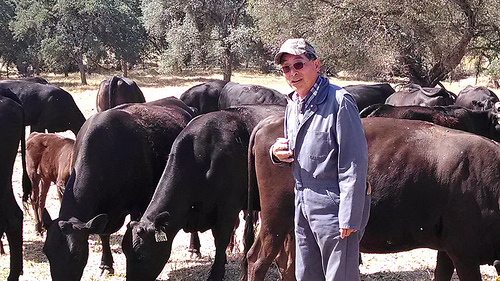
Not even a three year drought weakens Glenn Nakagawa’s resolve or determination to maintain his herd and protect the unique genetics of his American Wagyu cattle.
By Brenda Carlson, FSA Lead Regional Public Affairs Specialist
The Nakagawa Ranch (Valley Springs, Calif.), owned and operated by Glenn and Keiko Nakagawa, is a cattle operation steeped in history and tradition. The Nakagawas raise American Wagyu (Wa = Japanese and, Gyu= Cow) cattle, originating in Japan, but bred today in the U.S. for their excellent meat quality and calving ease.
Nakagawa is a third generation rancher who owns and works the same ground his grandfather, an immigrant from Hiroshima, Japan purchased two days before Pearl Harbor — an event that would force the entire Nakagawa family into internment camps until 1946 when they were able to return home to the ranch. Continue reading
U.S. and Korea Reach Agreement on Organic Standards
An agreement between the United States and Korea has set standards for organic products that can be accepted in either country. Beginning July 1, organic products certified in the United States or Korea can be labeled as organic in either country. This will allow American organic farmers, processors, and businesses greater access to Korea’s growing market for organic products. “Korea is a growing, lucrative market for U.S. organic products, and this arrangement increases demand for American organic products,” said Agriculture Secretary Tom Vilsack. Without this equivalency arrangement in place, organic farmers and businesses wanting to sell organic processed products in either country would have to obtain separate certifications to meet each country’s organic standards. This typically has meant two sets of fees, inspections, and paperwork, and delays for U.S. farmers and businesses trying to export. This is Korea’s first organic equivalency arrangement with any trading partner and serves as an example of how closely the United States is working with Korea to address emerging issues and strengthen the trade relationship. Learn more.
Changes to Crop Insurance Will Provide Flexibility to Farmers
The U.S. Department of Agriculture filed an interim rule this week allowing the department to move forward with changes to crop insurance provisions. The provisions provide better options for beginning farmers, allow producers to have enterprise units for irrigated and non-irrigated crops, give farmers and ranchers the ability to purchase different levels of coverage for a variety of irrigation practices, provide guidance on conservation compliance, implement protections for native sod and provide adjustments to historical yields following significant disasters. Written comments on the rule must be submitted by Sept. 2. View the interim rule or submit comments.
New Web Resource Available to Beginning Farmers, Ranchers
A new resource is available that provides a centralized, one-stop resource for beginning farmers and ranchers to explore USDA initiatives designed to help them succeed. The USDA New Farmers website provides information on how to increase access to land and capital, build new market opportunities, participate in conservation efforts and select and use the right risk management tools. “New and beginning farmers are the future of American agriculture,” said Deputy Secretary Harden, who made the announcement last week at the Beginning Farmer and Rancher Advisory Committee held at the University of California, Davis, California. “We must help new farmers get started if America is going to continue feeding the world and maintain a strong agriculture economy.” View the Web resource.
USDA Seeks Input for 2017 Census of Agriculture
Suggestions on what to change and how to improve the 2017 Census of Agriculture is being requested by the U.S. Department of Agriculture. “This is the perfect time to ask for suggestions since the 2012 data are fresh on our minds,” said Joseph T. Reilly, administrator for the USDA National Agricultural Statistics Service (NASS) that conducts the Census. NASS released the complete 2012 Census of Agriculture results on May 2, 2014. Individuals or organizations may submit suggestions on questionnaire items to add or delete and any other ideas concerning the Census. Comments will be accepted online or via mail through Aug. 4. Submit comments online or mail to Census Content Team, Room 6451, 1400 Independence Ave, SW, Washington, DC 20250.
Reminder: County Committee Nomination Period Now Open
The nomination period for the 2014 county committee elections opened last week, allowing farmers and ranchers to select themselves or others as candidates to sit on local county committees and help make important agricultural decisions. Members of the committee deliver FSA farm programs at the local level and make decisions needed to administer the programs in their counties. Those who would like to submit a nomination may download forms online (in English or Spanish) or visit their local FSA county office. Learn more.
Funding Available to Turn Biomass Material to Energy
The U.S. Department of Agriculture will begin accepting applications from energy facilities interested in receiving agricultural residues to generate clean energy. Beginning June 16, biomass conversion facilities can apply to receive residues from farmers and ranchers and use the materials to create renewable energy. Support for the program comes through the Biomass Crop Assistance Program, or BCAP, that provides funding to establish, maintain, harvest and deliver agricultural residues to qualifying energy facilities. Applications must be submitted by July 14, 2014. Learn more.
County Committee Nomination Period Opens Sunday, June 15
The nomination period for the 2014 county committee elections opens on Sunday, June 15. The nomination period — which runs through Aug. 1 — allows farmers and ranchers to select themselves or others as candidates to sit on the local county committee and help make important agricultural decisions. Members of the committee deliver FSA farm programs at the local level and make decisions needed to administer the programs in their counties. Learn more
Small Operation Perseveres Until Drought Relief Comes
By Brenda Carlson, FSA Lead Regional Public Affairs Specialist
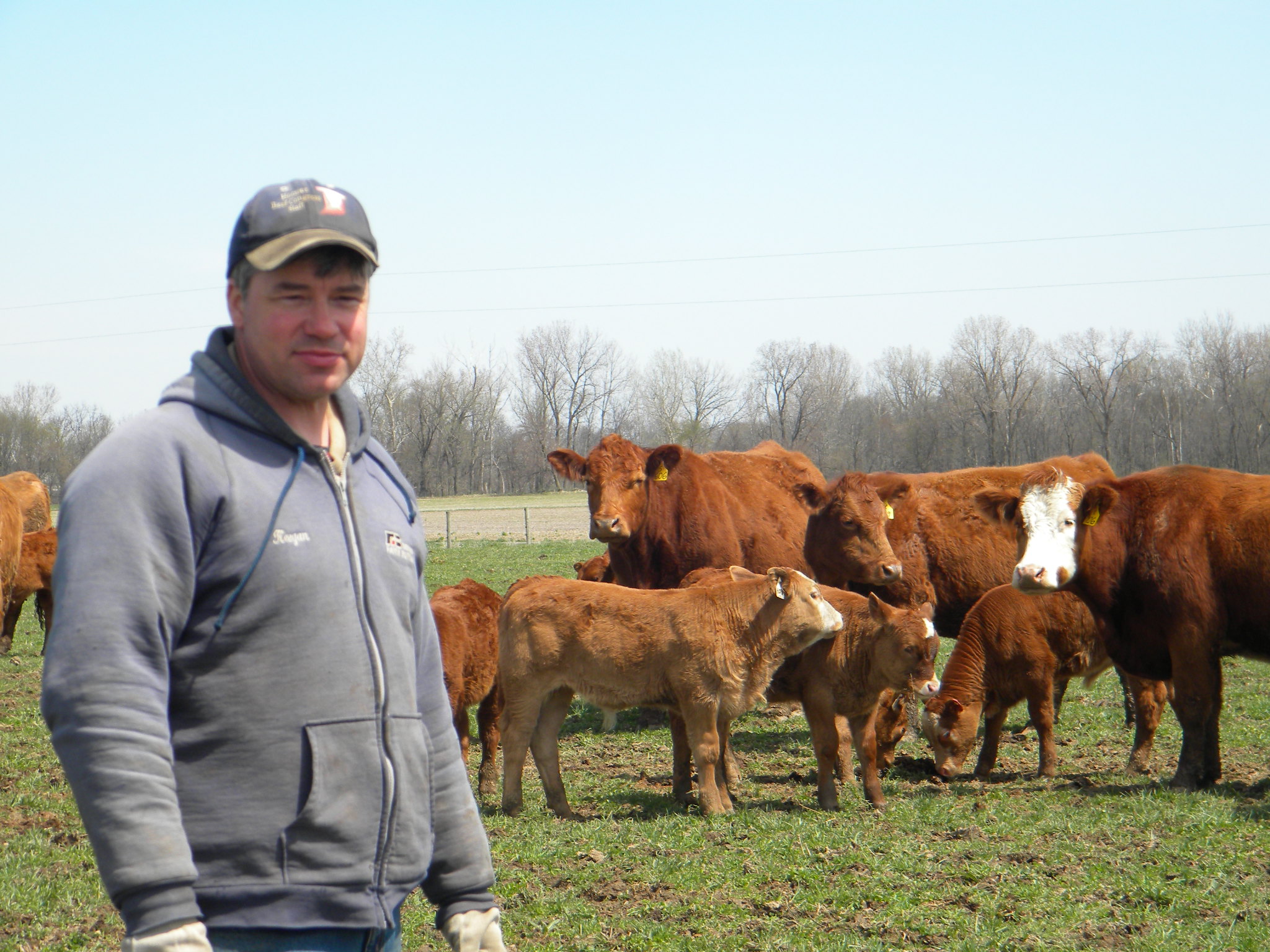
Keegan Poe of Johnson County, Indiana is a busy man. Not only is Poe a regional manager for Indiana Farm Bureau, but in his “spare time,” he holds down a second full-time job raising beef cattle and running Poe’s Quality Meats where he sells family raised beef and lamb direct from farm to consumer.
“My family has raised sheep for 70 years here in Indiana, but my passion for raising cattle started with one dairy steer when I was involved with 4-H as a youth,” said Poe. “I asked my dad if I could show cattle and he said, ‘sure’ and the rest is history.” Continue reading