A little over three weeks remain for producers to sign up for the Average Crop Revenue Election Program (ACRE). Changes to this year’s program allow producers to choose to enroll in either ACRE or the Direct and Counter-Cyclical Payment Program (DCP). Originally, producers who signed up for ACRE could not move out of the program for at least five years. With the extension of the 2008 Farm Bill, those rules have changed, giving farmers an option to move out of ACRE into DCP or move from DCP into ACRE. Producers must contact their county office by June 3 to enroll in ACRE. The deadline to enroll in DCP is August 2. Read more about DCP and ACRE or contact a local county office to sign up.
On Average, Farmers Take 3 Sick Days a Year
Sick days costs the U.S. economy $84 billion a year, but a study conducted by Gallup and Healthways shows farmers aren’t to blame. On average, workers in the agriculture, forestry and fishing industries miss one day every four months, ranking them second only to physicians. According to the study, farmers don’t take sick days because of the constant attention needed by their crops. Professions that take the most sick days include service workers, office workers, nurses and business owners. Read more (Drovers Cattle Network).
19-Year-Old Hopes to Retire Early and Farm

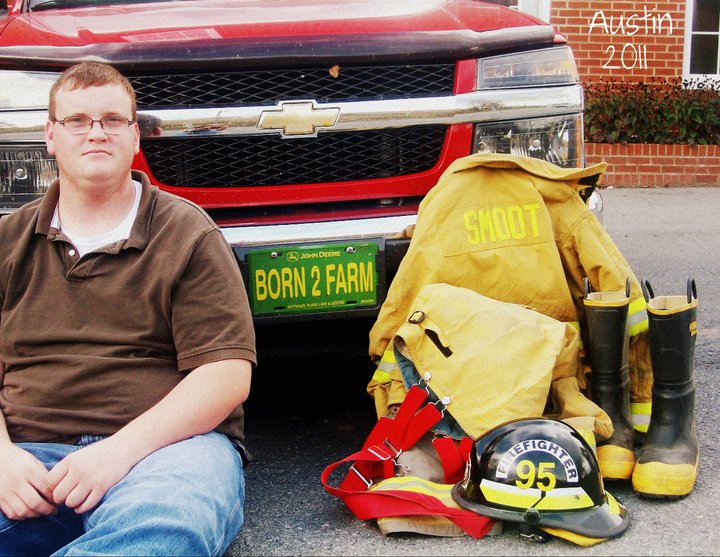
At age 19, Austin Midkiff has already made plans to retire at a young age and farm the rest of his life.
Austin Midkiff thinks, breathes and lives farming. It’s all he has done since he was six years old.
By the time he was 14, he took over his grandparent’s 10-acre farm in Springdale, W.Va.
“When I turned 16 my grandparents sold everything to me in order to teach me how to get things on my own and start from scratch,” said Midkiff. “It’s hard starting off.”
Now, at age 19, he understands the difficulty of being a beginning farmer. For the past three years, he was able to build his cow/calf herd with a small loan from the Farm Credit Bureau, using his grandfather as a cosigner. But this year was different. His grandfather’s failing health prohibited him from cosigning on another loan and Midkiff’s young age didn’t make him the likely candidate to be approved. Continue reading
Free Webinar Provides Information on Upcoming CRP Sign-Up
Officials from the Farm Service Agency and the Natural Resources Conservation Service will take part in a free webinar to discuss the upcoming Conservation Reserve Program open sign-up period. Sponsored by the Women, Food and Agriculture Network, the webinar will provide information on eligibility requirements, ways to increase acceptance into the program, annual payment rates and CRP practices and management options. The 45th general CRP sign-up opens May 20 and runs through June 14. During that time, producers can sign up to receive cost-share assistance to plant long-term, resource-conserving covers and receive annual rental payment for the length of the contract. Register for the webinar.
Producers Test Drones for More Precise Crop Information
Farmers are investigating the use of drones to help monitor cropland and spray pesticides. Several universities are testing the unmanned aircrafts as a way to further the use of technology in agriculture. As GPS, tablets and sensors are being used to accurately monitor fields drones will play a more precise role by determining if crops need watering, additional fertilizer or if they are suffering from insect infestation. Read more (Washington Post).
FSA Resumes Farm Payments for SURE, NAP and MILC
After a temporary suspension, the Farm Service Agency announced it would once again start issuing farm payments beginning Wednesday, May 8. This includes payments for the 2011 Supplemental Revenue Assistance Payments Program (SURE), the Noninsured Crop Assistance Program (NAP) and the Milk Income Loss Contract Program (MILC). “I’m pleased to announce that farmers and ranchers can expect to begin receiving their payments beginning today, May 8,” said Garcia. “We appreciate the producers’ patience during the delay. We’re working diligently to get these payments out as quickly as possible.” The payments were suspended on March 4 in order to assess the impact of sequestration and determine the least disruptive process possible for carrying out the required cuts. Learn more.
Website Provides Listing of CRP Sign-Up Meetings by State
A website has been developed to help farmers and ranchers find a meeting to discuss the upcoming Conservation Reserve Program (CRP) sign-up. The 45th general CRP sign-up opens May 20 and runs through June 14. During that time, producers can sign up to receive cost-share assistance to plant long-term, resource-conserving covers and receive annual rental payment for the length of the contract, which is 10-15 years. The meetings will provide information on eligibility requirements, ways to increase acceptance into the program, annual payment rates and CRP practices and management options. The website — sponsored by Pheasants Forever and Quail Forever — allows users to click on a map to view upcoming meetings in their state. Visit the website.
Plants Really Do Talk to Each Other
Researchers may have found a secret language used by plants that produces positive and negative results. By using nanomechanical vibrations or sounds, plants communicate to one another even when all forms of communication seem to be cut off. The study, published in the May issue of BMC Ecology, showed that chili plants grow more successfully next to basil plants. But when chemical and light signals are blocked and physical contact is removed, the plants still seem to communicate and flourish. The opposite is also true. When planted next to fennel, chili pepper seeds are hindered from germinating. Fennel is knows to release chemicals that stunt the growth of other plants; however, when protected from the chemical, the chili pepper was still reluctant to germinate when placed near the plant. Read more (Science Daily) or view the abstract.
Report: Multiple Factors Play Role in Honey Bee Decline
Multiple factors are playing a part in the decline of honey bee colonies, according to a report released this week by the U.S. Department of Agriculture and the Environmental Protection Agency. Based on the report, parasites and diseases, genetics, poor nutrition and pesticide exposure are contributing factors, although more research is being conducted. About one-third of all food and beverages are made possible by pollination mainly by honey bees. Since 2006, there has been a widespread disappearance of adult honeybees from beehives. This decline places greater pressure on agricultural sectors reliant on commercial pollination services. Read the report.
Backyard Farmers Make Chicken Diapers, Other Accessories Chic
Chicken diapers and saddles are becoming a multimillion dollar industry. As more urban households embrace backyard chicken coups, online stores are cropping up selling everything from poultry lingerie to chicken caviar. Based on a report from the U.S. Department of Agriculture, 0.8 percent of households in Los Angeles, Miami and New York owned chickens in 2010. Another 4 percent said they expect to get a chicken in the next few years. Read more (NPR).